
Fracture Rehabilitation Physical Therapy
Bones heal. With the right care, so does everything around them.
A fracture changes things, but it doesn’t have to change everything. At Synergy Physical Therapy, we specialize in the kind of hands-on, progressive rehabilitation that helps your body heal completely, rebuild the strength that protects your bones, and get you back to the activities and the life you love safely and confidently.
Quick Answer
What Is Fracture Rehabilitation Physical Therapy?
Fracture rehabilitation physical therapy is a structured recovery program for patients healing from spinal or orthopedic fractures, including vertebral compression fractures, stress fractures, and trauma-related fractures. PT begins as soon as the fracture is medically stable, typically within 4 to 6 weeks of injury or surgery. Treatment includes pain management, postural correction, progressive strengthening, and bone-protective movement training. Most patients complete an 8 to 12 week program, with the goal of restoring function, reducing pain, and preventing future fractures.
By the Numbers
Physical therapy following vertebral fractures has been shown to significantly improve back pain and patient-reported outcomes, with research published in the American Journal of Medicine (2024) demonstrating meaningful gains in pain, function, and quality of life for patients who completed supervised rehabilitation programs compared to those who did not. (American Journal of Medicine, 2024)
We Get It
A fracture, whether from a fall, trauma, a stress injury, or osteoporosis, can feel like the ground has shifted beneath you. The pain is real. The worry about reinjury is real. And the uncertainty about what comes next, about what your body can and can’t do now, can be just as hard to navigate as the physical recovery itself. You don’t have to figure that out on your own.
The Synergy Promise
At Synergy Physical Therapy, we treat fracture rehabilitation with the depth and precision it deserves. Our Doctors of Physical Therapy understand how bones heal, what the surrounding muscles and connective tissue need during recovery, and how to progressively build you back safely, strategically, and with your long-term bone health always in mind. We serve patients across Utah with care that’s personalized, hands-on, and built around you.
At a Glance
Fracture Rehabilitation at a Glance
| Category | Details |
|---|---|
| Best For | Adults recovering from spinal compression fractures, stress fractures, trauma-related fractures, or osteoporotic vertebral fractures |
| Typical Program Length | 8–12 weeks |
| Session Frequency | 2–3 times per week |
| Common Techniques Used | Pain management, postural re-education, progressive strengthening, balance training, bone-loading exercises, manual therapy, fall prevention training |
| When to Start | As soon as the fracture is medically stable — typically 4–6 weeks post-injury or post-surgery, per physician clearance |
| Insurance | Most major insurance accepted — contact us to verify your benefits |
| Referral Required | No* |
| Clinic Locations | Spanish Fork, Provo, Mapleton, UT |
*Referral is not required for physical therapy treatment. However, if you have recently had surgery, we want to communicate with your surgical team about your progress.
What Is Fracture Rehabilitation — and Why Does It Matter?
A — spinal or vertebral fracture occurs when one or more of the bones in the spine crack, collapse, or break, most commonly due to trauma, a sports injury, a fall, or weakened bone density from osteoporosis. Spinal compression fractures, in which a vertebra collapses under pressure, are particularly common in older adults and can cause significant pain, height loss, and postural changes.
While rest and immobilization allow the fracture to heal, they do very little to address the muscle weakness, poor posture, balance deficits, and movement fear that accumulate during recovery. Physical therapy bridges that gap. Beginning as soon as the fracture is medically stable, PT restores the muscular support system surrounding the fracture site, corrects the compensatory movement patterns that develop during healing, and, critically, builds the bone-protective strength and balance needed to prevent future fractures.
For patients with osteoporosis-related fractures, PT also plays a vital role in bone health education, fall prevention, and long-term skeletal resilience.
Learn more about vertebral compression fractures from the American Physical Therapy Association’s ChoosePT resource.
Conditions & Presentations
What Conditions Does Fracture Rehabilitation Physical Therapy Treat?
Our fracture rehabilitation program is designed for patients healing from spinal and orthopedic fractures across a wide range of causes and presentations.
- Vertebral compression fractures (lumbar or thoracic)
- Osteoporotic spinal fractures
- Stress fractures of the spine or pelvis
- Trauma-related spinal fractures (falls, accidents, sports injuries)
- Sacral fractures
- Coccyx (tailbone) fractures
- Rib fractures affecting mobility and breathing
- Post-surgical fracture stabilization recovery
- Pathological fractures related to bone density conditions
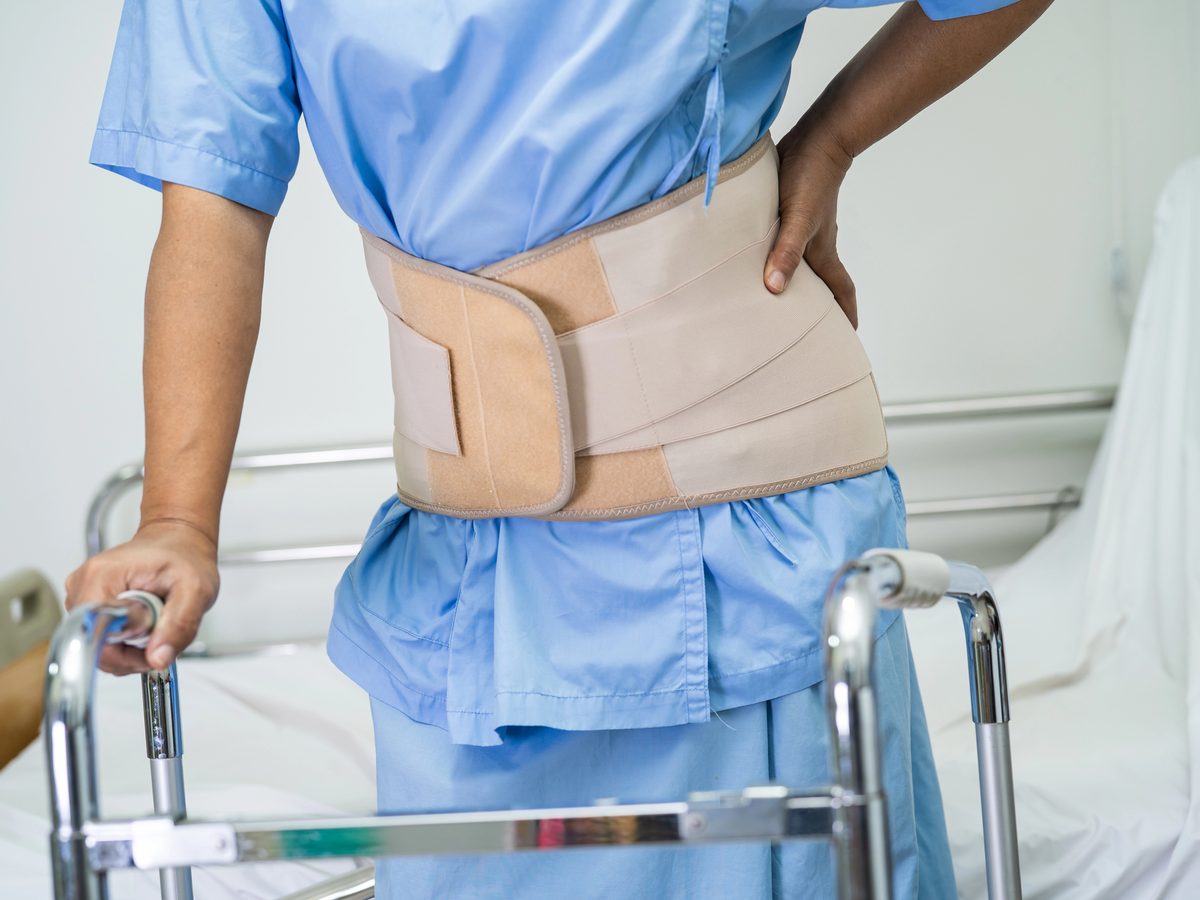
- Fractures requiring bracing or orthotic management
- Kyphosis or postural collapse associated with vertebral fractures
Don’t see your specific situation listed? Reach out — we likely treat it. Contact us here →
Your Recovery Roadmap
What Does Fracture Rehabilitation Treatment Look Like?
Every fracture is different in type, location, severity, and cause. Here’s how we build your recovery at Synergy Physical Therapy:
Step 1. Stabilize & Protect
Before PT formally begins, your fracture needs to be medically stable. Once your physician clears you, we begin with a comprehensive assessment of your pain levels, posture, movement limitations, and baseline strength. Early sessions focus on pain management, gentle mobility, safe posture coaching, and the initial activation of the stabilizing muscles surrounding your fracture site. If you’re in a brace, we’ll work within those parameters, optimizing what we can while fully protecting your healing bone.
Step 2. Rebuild Strength & Stability
As healing progresses, so does your program. We introduce progressive loading exercises designed to stimulate bone healing and rebuild the muscular support system around the fracture site. Core and back extensor strengthening, postural re-education, and balance training become central to each session. For patients with osteoporotic fractures, this phase also includes targeted bone-loading exercises proven to improve bone density over time. Every progression is guided by your body’s response, not a rigid timeline.
Step 3. Restore Function & Prevent Re-Injury
The final phase is about closing the gap between recovery and real life and making sure you stay recovered. We advance to higher-level functional movement, activity-specific training, ergonomic and body mechanics coaching, and, for patients at risk of future fractures, a comprehensive fall prevention program. You’ll leave this phase stronger, more aware of your body, and genuinely equipped to protect your bone health for the long term.
Benefits
What Are the Benefits of Fracture Rehabilitation Physical Therapy?
✓Significantly less pain
, as PT following vertebral fractures has been shown to significantly improve back pain and patient-reported outcomes (American Journal of Medicine, 2024)
✓Faster, more complete healing
, as progressive loading and bone-stimulating exercise support the body’s natural healing process and help you regain function sooner than rest alone
✓Stronger bones and muscles
, as targeted strengthening rebuilds the muscular support system around your fracture site and evidence-based bone-loading exercise can improve bone density over time (APTA ChoosePT, 2023)
✓Better balance and fall prevention
, as balance training and movement re-education directly address one of the most critical risk factors for re-fracture, especially in older adults
✓Corrected posture
, as vertebral fractures, particularly compression fractures, can lead to a forward-stooped posture (kyphosis). PT actively works to restore alignment and prevent further postural collapse
✓Confidence to move again
, as fear of re-injury is one of the most underestimated barriers to recovery. We work to restore your trust in your body so you move freely, not fearfully
Why Synergy
Why Choose Synergy Physical Therapy for Fracture Rehabilitation?
Precision Care for Complex Recoveries
Fracture rehabilitation requires a careful balance of protecting healing bone while progressively rebuilding the strength and function around it. Our Doctors of Physical Therapy (DPT) understand that balance at a deep clinical level and bring that precision to every session. No guessing. No cookie-cutter protocols. Just expert care calibrated to exactly where you are.
Hands-On, Personalized Care Every Session
At Synergy Physical Therapy, every patient receives the individualized attention they deserve. Our Specialty Trained Clinical Staff—Board Certified Clinicians, Doctors of Physical Therapy, and Specialty Trained Physical Therapy Assistants—are with you throughout every step of your recovery, providing hands-on, expert care tailored specifically to you. Because no two patients heal the same way, your therapist leads each session with a personalized approach, adjusting your program in real time as your body progresses.
Whole-Person Recovery
Fracture rehabilitation isn’t just about the bone. It’s about your posture, your balance, your bone health, your movement confidence, and your ability to live actively without fear. We treat all of it because getting you back to full function means addressing the whole picture, not just the fracture site.
“
If you ever need physical therapy this is by far the best place to go. They care, listen and they go out of their way to help. Great people and a great company!!!
— Jason W., Spanish Fork
References
Citations & Sources
- American Journal of Medicine. “Physical Therapy for Patients with Thoracolumbar Vertebral Fractures.” AmJMed.com, 2024. https://www.amjmed.com/article/S0002-9343(24)00753-8/abstract00753-8/abstract)
- American Physical Therapy Association. “Physical Therapy Guide to Spinal Compression Fractures.” ChoosePT.com, 2023. https://www.choosept.com/guide/physical-therapy-guide-spinal-compression-fractures
- International Journal of Health Sciences and Research. “A Thorough Physical Therapy Program for a Patient with a Conservatively Handled Thoracic Vertebral Fracture.” IJHSR, February 2024. https://www.ijhsr.org/IJHSR_Vol.14_Issue.2_Feb2024/IJHSR25.pdf
- North American Spine Society. “NASS Evidence-Based Clinical Guidelines for Vertebral Compression Fractures.” Spine.org, 2024. https://www.spine.org
- Mayo Clinic. “Vertebral Fracture.” MayoClinic.org. https://www.mayoclinic.org/diseases-conditions/vertebral-fracture/symptoms-causes/syc-20535020
FAQ
Fracture Rehabilitation Physical Therapy — Frequently Asked Questions
Is fracture rehabilitation physical therapy right for me?
If you’ve been diagnosed with a spinal compression fracture, stress fracture, or trauma-related fracture, or if you’ve recently had surgery to stabilize a fracture, then supervised physical therapy is a strongly recommended and evidence-backed part of your recovery. A referral is not required to begin physical therapy, but we want to communicate with your care team about your progress as your fracture heals. If you’re unsure whether you’re ready to start, give us a call and we’ll help you figure out the right next step.
When is it safe to start physical therapy after a fracture?
Physical therapy should begin as soon as your fracture is medically stable, a determination made by your physician or surgeon, typically around 4 to 6 weeks post-injury for conservatively managed fractures or sooner for surgically stabilized fractures. Starting PT at the right time is important: starting too early can compromise healing, but waiting too long allows muscle weakness and postural problems to compound. We’ll work within your physician’s clearance and adjust to exactly where your body is when you arrive.
How many sessions will I need for fracture rehabilitation?
Most fracture rehabilitation programs run 8 to 12 weeks, with sessions 2 to 3 times per week. Timelines vary based on fracture type, severity, location, and whether surgery was required. At your first visit, we’ll give you a realistic, individualized estimate based on your specific situation, your healing progress, and your goals so you always know what to expect and why.
What should I expect at my first appointment?
Your first session is primarily a comprehensive assessment. We’ll review your imaging, your fracture history, your current pain and movement limitations, your medications, including any bone-health medications, and what you want to be able to do when you’re done with rehab. From there, we build your plan together, always starting where you are and never where we think you should be.
Will my insurance cover fracture rehabilitation?
Physical therapy for fracture rehabilitation is covered by most major insurance plans. We recommend verifying your specific benefits before your first visit. Our team is happy to help you navigate that process — just reach out and we’ll point you in the right direction.
What if I’m still in a brace when I start PT?
That’s completely fine, and more common than you might think. We routinely work with patients who are still in spinal braces or orthotic devices. Your program will be designed around your current restrictions and adapted as your physician progressively lifts precautions. We’ll make the most of what’s available to work on at every stage.
My fracture was caused by osteoporosis. Can PT help with that too?
Absolutely, and this is one of the most important things PT can address for osteoporotic fracture patients. Beyond recovering from the fracture itself, we incorporate evidence-based bone-loading exercises, balance and fall prevention training, and postural correction, all of which are proven to support long-term bone health and reduce the risk of future fractures. If your fracture was osteoporosis-related, we’ll build bone health into the core of your program from day one.
I’m afraid of re-fracturing during PT. Is it safe?
This is one of the most common concerns we hear — and it’s completely understandable. The short answer is yes, PT is safe when it’s designed correctly. Every exercise in your program is chosen and progressed specifically based on your fracture type, your healing stage, and your physician’s clearance. We never load what isn’t ready to be loaded. Fear of movement is something we actively work to address — because moving safely and confidently is part of the recovery, not a risk to it.
Keep Exploring
Related Services You May Benefit From
Spinal Fusion Rehabilitation →
Laminectomy Rehabilitation →
Discectomy Rehabilitation →
Overuse Injury Physical Therapy →
Meet Our Physical Therapy Team →
Lumbar Disc Arthroplasty →
Your Fracture Is Part of the Story. Not the End of It.
A fracture doesn’t have to define what you can do or how you move forward. Our team at Synergy Physical Therapy is ready to build a rehabilitation program that respects your healing timeline, rebuilds your strength, and gets you back to the life you love. Right here in Utah, with the hands-on, personalized care you deserve.